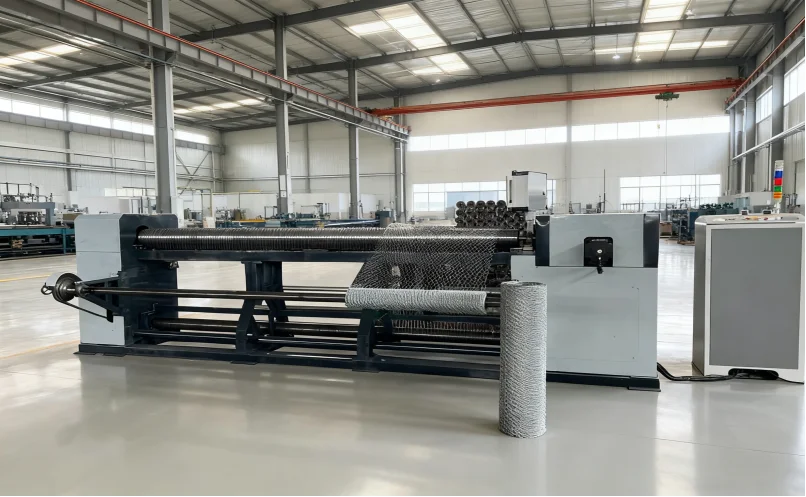
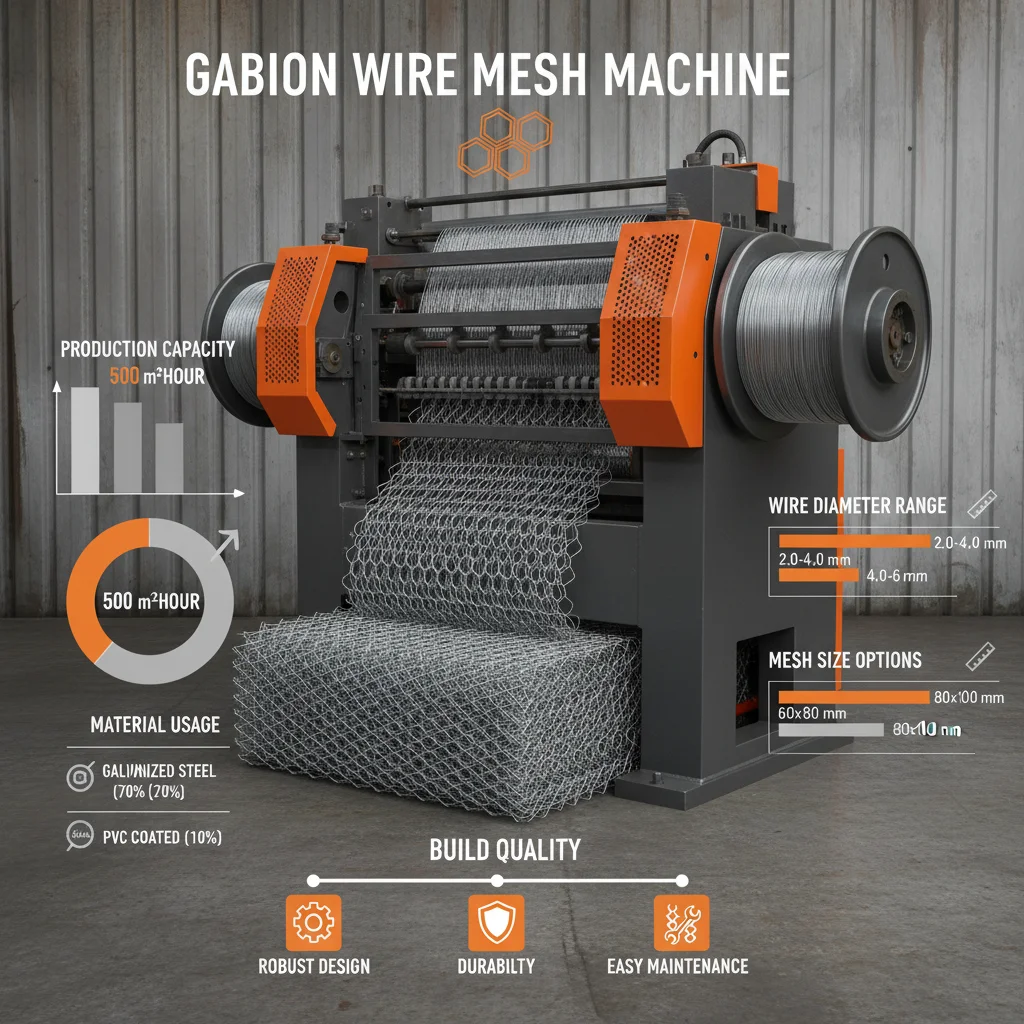
The global demand for erosion control and civil engineering solutions has led to a significant increase in the utilization of gabion structures. At the heart of this production cycle is the gabion wire mesh machine, a specialized piece of equipment designed to weave high-strength hexagonal wire mesh used in retaining walls and riverbank stabilization. Understanding the technical nuances of these machines is essential for manufacturers aiming to maintain structural integrity and efficiency in large-scale infrastructure projects.
In the modern industrial landscape, the shift toward automation has transformed how wire mesh is produced. A high-performance gabion wire mesh machine now integrates advanced PLC controls and servo motor technology to ensure that mesh sizes and wire diameters are consistent across thousands of meters of output. This precision is not merely a luxury but a necessity, as the stability of a gabion wall depends entirely on the uniformity of the weave and the strength of the twists.
For businesses looking to scale their production, investing in a professional gabion wire mesh machine ensures a balance between high weaving speeds and rigorous quality control. By leveraging patented designs and heavy-duty frames, manufacturers can significantly reduce downtime and operational costs while meeting the stringent standards of international construction projects.

Technical Specifications of Gabion Wire Mesh Machines
The technical capability of a heavy-type gabion wire mesh machine is defined by its versatility in handling different mesh sizes and wire diameters. Standard configurations typically support mesh sizes such as 5070mm, 6080mm, 7090mm, and 80100mm, with the ability to customize dimensions based on specific project requirements. Wire diameters ranging from 2.0mm to 4.0mm can be processed, ensuring the mesh is strong enough to hold heavy stone fill without deformation.
Furthermore, the flexibility of the twisting mechanism allows for 3, 5, or 7 twists, which directly affects the stability of the hexagonal weave. With power requirements ranging from 33kw to 45kw, these machines are engineered for continuous industrial operation. The integration of a dedicated spring winding machine and a cutting machine completes the production line, transforming raw wire into ready-to-use gabion fabric.
Advanced Servo Motor Integration and PLC Control
The transition from traditional mechanical cams to full servo motor power sources has revolutionized the gabion wire mesh machine. Servo motors provide precise control over every movement, making the debugging process significantly easier and reducing the time required to switch between different product specifications. This precision results in higher machining accuracy and a noticeable increase in weaving speed compared to older models.
Complementing the hardware is a sophisticated PLC (Programmable Logic Controller) system. The PLC is equipped with dual twist data, allowing operators to switch between three, five, and seven twists with a single key press. This eliminates the need for cumbersome electronic cam programming, which often requires highly specialized technicians and lengthy downtime during adjustments.
By combining these technologies, the machine achieves a state of "arbitrary switching," meaning the thorn shaft can transition between intermittent and continuous rotation (long and short) in any operating state. This level of control ensures that the resulting wire mesh is consistent in quality, regardless of the complexity of the weave pattern.
The Impact of Integrated Double Rack Design
Stability is paramount when operating a heavy-duty gabion wire mesh machine, especially one with a main engine weight exceeding 18 tons. The introduction of a patented integrated double rack design has fundamentally changed the structural footprint of the equipment. This design allows the machine to take up less space during rack movement while providing a more streamlined and secure structure.
The front and rear dual rack design ensures that both racks are powered, distributing the mechanical stress evenly across the machine's frame. This configuration not only enhances the overall stability of the weaving process but also prevents the vibrations that often plague single-rack systems, leading to a more refined finish on the produced mesh.
Beyond the physical stability, the integrated rack system simplifies the maintenance process. Because the structure is more streamlined, technicians have better access to core components. This design philosophy reflects a commitment to safety and efficiency, ensuring that the gabion wire mesh machine can operate at peak capacity for extended periods without structural fatigue.
Performance Comparison of Weaving Technologies
When evaluating different production methods, the efficiency of the twisting mechanism and the power of the drive system are the most critical metrics. Traditional machines often struggle with inconsistency in twist tension, whereas modern PLC-driven systems maintain a constant torque. This ensures that the hexagonal cells of the mesh remain locked even under the extreme pressure of stone filling.
The following data represents the performance ratings of various configurations of the gabion wire mesh machine, focusing on weaving speed, precision, and ease of adjustment. The "Heavy-Type PLC" configuration consistently outperforms traditional mechanical setups due to its servo-driven architecture and dual-rack power distribution.
Gabion Wire Mesh Machine Technology Performance
Global Applications in Civil Engineering
The output from a professional gabion wire mesh machine is utilized globally for critical infrastructure projects. In riverine environments, gabion baskets are used to prevent bank erosion and manage floodwaters. The high-strength hexagonal mesh allows for the permeability of water while retaining the soil and rock, making it an eco-friendly alternative to solid concrete walls.
In mountainous regions and highway construction, these mesh products are indispensable for slope stabilization and landslide prevention. The ability to produce custom mesh widths—such as the 600mm standard or customized sizes—allows engineers to tailor the baskets to the specific topography of the site, ensuring maximum structural support and safety.
Maintenance and Timed Circulation Lubrication
One of the most significant challenges in wire mesh production is the accumulation of dust and metal shavings, which can lead to premature wear of the moving parts. To combat this, the modern gabion wire mesh machine features fully enclosed lubricating oil tanks designed on both sides of the equipment. This system prevents contaminants from entering the operating mechanism, drastically extending the lifespan of the gears and bearings.
The implementation of a timed circulation lubrication method ensures that every motion mechanism is consistently oiled without requiring manual intervention. This not only reduces the risk of human error in maintenance but also provides a cleaning function that flushes out impurities during the circulation process, maintaining the machine's high machining accuracy.
Regular maintenance of the servo motors and PLC sensors is also simplified thanks to the streamlined double rack design. By minimizing the need for manual lubrication and maximizing the protection of core components, manufacturers can achieve a higher operational uptime and a lower total cost of ownership.
Operational Efficiency and Cost Analysis
Maximizing the ROI of a gabion wire mesh machine requires a deep understanding of the balance between speed and quality. By utilizing self-processed core components and exclusive design programs, professional manufacturers can reduce the cost of replacement parts while maintaining a main engine weight of over 18 tons for ultimate stability.
The ability to adjust equipment in any operating state means that setup times are virtually eliminated. When a production line can switch from a 3-twist to a 7-twist configuration with a single key press, the factory's agility increases, allowing it to respond rapidly to diverse client orders without losing hours of productivity.
Ultimately, the synergy of servo power, PLC intelligence, and heavy-duty structural engineering leads to a lower cost per meter of mesh. The reduction in waste material and the increase in weaving speed make the high-end gabion wire mesh machine a strategic asset for any wire products manufacturer.
Technical Performance Analysis of Gabion Wire Mesh Machine Configurations
| Machine Configuration |
Control System |
Precision Level |
Stability Score |
| PLC Heavy Type |
Dual-Servo PLC |
Ultra-High |
10/10 |
| Standard Servo Type |
Single Servo |
High |
8/10 |
| Electronic Cam Type |
Digital Cam |
Medium |
7/10 |
| Mechanical Type |
Manual Gear |
Low |
5/10 |
| Custom Light Type |
Basic PLC |
Medium |
6/10 |
| Hybrid Model |
Semi-Servo |
High |
8/10 |
FAQS
Our PLC heavy-type machines are designed to handle wire diameters ranging from 2.0mm up to 4.0mm. This ensures that the produced mesh is sufficiently robust for heavy-duty industrial applications, such as retaining walls and flood defense systems, where structural strength is non-negotiable.
The PLC system allows operators to switch between 3, 5, and 7 twists with a single key press using pre-set dual twist data. This removes the need for complex manual adjustments or cumbersome electronic cam programming, significantly reducing setup time and human error during product transitions.
The patented integrated double rack design provides enhanced stability by distributing power to both the front and rear racks. This minimizes vibration during high-speed weaving, takes up less space during movement, and ensures a more streamlined and safer operation for the operator.
The machines utilize fully enclosed lubricating oil tanks on both sides, employing a timed circulation lubrication method. This system ensures that all motion mechanisms are consistently lubricated while simultaneously cleaning out dust and impurities, preventing internal damage and wear.
Yes, while standard widths like 600mm are common, our gabion wire mesh machines can be customized to meet specific width requirements. This flexibility allows manufacturers to produce tailor-made mesh for unique architectural or engineering specifications.
Depending on the configuration and the wire diameter being processed, the power requirements typically range from 33kw to 45kw. The use of servo motors as power sources ensures that this energy is used efficiently to maintain high machining accuracy and weaving speeds.
Conclusion
The evolution of the gabion wire mesh machine from manual mechanical systems to PLC-controlled servo powerhouses has fundamentally shifted the efficiency of civil engineering supply chains. By integrating patented double rack designs and timed circulation lubrication, manufacturers can now achieve unprecedented levels of precision and stability. The ability to rapidly switch twist configurations and handle wire diameters up to 4.0mm ensures that the resulting products meet the highest global standards for safety and durability.
As the world continues to invest in sustainable infrastructure and erosion control, the demand for high-quality gabion products will only grow. Investing in advanced weaving technology is no longer just about increasing speed; it is about ensuring reliability and reducing operational overhead through automation. For those seeking to lead the market in wire mesh production, transitioning to a heavy-duty, PLC-integrated system is the most viable path forward. Visit our website: www.htmeshmachines.com