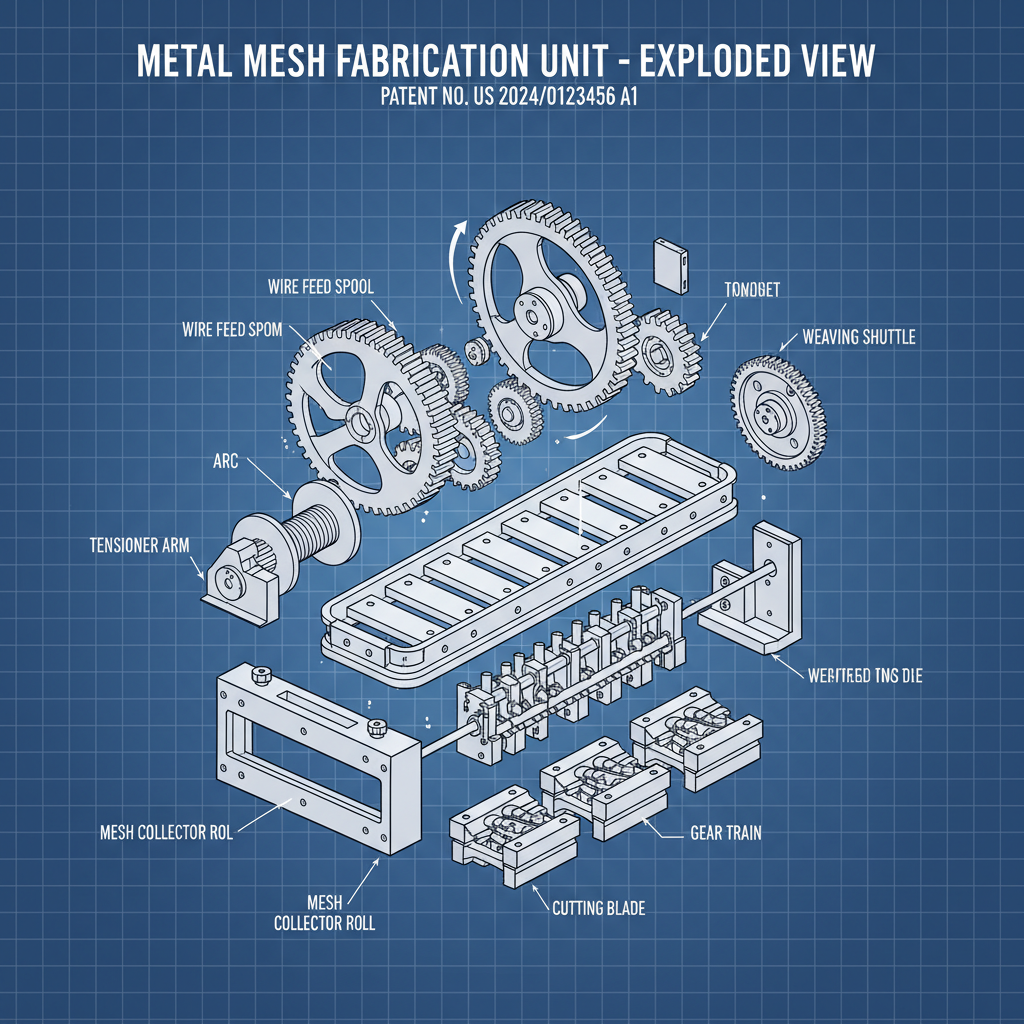
Industrial erosion control and retaining wall construction rely heavily on high-quality woven structures. A gabion wire mesh machine is the primary tool used to automate the production of these hexagonal cages, ensuring the structural integrity required for civil engineering projects. This article explores the technical requirements and selection criteria for sourcing heavy-duty weaving equipment.
For procurement officers and engineers, understanding the difference between basic manual weaving and PLC-controlled automation is critical. Modern stone cage equipment must handle thick galvanised wires while maintaining precise mesh dimensions to prevent cage deformation during filling. The intersection of material science and mechanical automation determines the longevity of the finished product in harsh outdoor environments.
Readers will gain insights into the essential technical parameters, such as wire diameter ranges and twisting configurations, and learn how to evaluate equipment stability. We will also analyze the role of servo motors and timed lubrication in reducing downtime, providing a professional framework for choosing a reliable manufacturing partner for gabion wire mesh machine systems.
Technical Foundations of Stone Cage Weaving
The production of hexagonal wire netting for gabions is a complex mechanical process that involves twisting two parallel wires into a interlocking hexagonal pattern. Unlike standard chain-link fences, these cages must maintain a specific "twist" density to ensure that the mesh does not unravel under the pressure of heavy stone filling. The process requires high-torque movement and precise timing, which is why heavy-type equipment is designed with reinforced frames and high-capacity motors.
Historically, this process relied on mechanical cams and manual adjustments, which often led to inconsistencies in mesh size and high wear and tear on the machinery. However, the transition to PLC (Programmable Logic Controller) systems has allowed manufacturers to digitize the twisting data. This shift ensures that the mesh width and the number of twists per unit are consistent across thousands of meters of production, significantly reducing waste and increasing the reliability of the retaining structures.
Industrial Implementation and Selection Guide
When selecting equipment for large-scale production, it is necessary to analyze the relationship between the machine's mechanical architecture and the desired output quality. A heavy-duty system must balance speed with the physical stresses exerted by thick-gauge wire.
PLC Automation and Precision
The integration of PLC systems eliminates the need for cumbersome electronic cam programming. This allows operators to switch between different twist configurations—typically three, five, or seven twists—with a single key press. Such flexibility is essential for companies serving diverse projects, from light riverbank stabilization to heavy mountain slope reinforcement.
| Mesh Size (mm) | Wire Diameter (mm) | Twist Options | Power Requirement |
|---|---|---|---|
| 5070 | 2.0-4.0 | 3/5/7 | 33-45 kw |
| 6080 | 2.0-4.0 | 3/5/7 | 33-45 kw |
| 7090 | 2.0-4.0 | 3/5/7 | 33-45 kw |
| 80100 | 2.0-4.0 | 3/5/7 | 33-45 kw |
| Customized | 2.0-4.0 | 3/5/7 | 33-45 kw |
| Standard Heavy | 2.0-4.0 | 3/5/7 | 33-45 kw |
Wire Diameter and Mesh Specifications
The ability to handle wire diameters between 2.0mm and 4.0mm is a hallmark of professional-grade machinery. Heavier wires provide the necessary tensile strength for industrial cages but place significant stress on the twisting shafts. High-precision machining of core components ensures that the equipment can operate continuously without the shafts bending or the mesh width drifting from the set parameters.
Structural Stability and Rack Design
Stability is paramount when working with heavy-gauge wire. An integrated double rack design reduces the overall space required for rack movement while creating a more streamlined and stable structure. When both the front and rear racks are powered, the machine achieves a more balanced tension, preventing the wire from slipping and ensuring a perfectly uniform hexagonal pattern.
Lubrication and Maintenance Systems
To prevent dust and metallic impurities from entering the operating mechanism, fully enclosed lubricating oil tanks are essential. A timed circulation lubrication method ensures that all moving parts are constantly coated, which not only reduces friction but also serves a cleaning function, flushing out debris that could cause micro-damage to the precision components.
Servo Motor Integration
Modern industrial weavers utilize servo motors as the primary power source. Compared to traditional induction motors, servo motors offer superior control over acceleration and deceleration. This precision makes debugging easier and allows for faster weaving speeds without sacrificing the accuracy of the twist, directly impacting the overall hourly output of the facility.
Customization for Specific Projects
Different civil engineering standards require different mesh sizes and widths. The ability to customize the mesh width (e.g., beyond the standard 600mm) is a critical requirement for specialized infrastructure projects. A professional manufacturer should be able to adjust the equipment in any operating state to meet these specific technical drawings.
Production Capacity and Efficiency
The total cost of ownership is heavily influenced by the machine's weight and build quality. A main engine weighing over 18 tons indicates a level of robustness capable of handling the vibrations associated with high-speed heavy wire weaving. This physical mass, combined with PLC efficiency, ensures stable output even in harsh production environments.
FAQ
What is the primary function of a stone cage weaving system?
These systems are designed to automatically weave heavy-gauge wire into a double-twisted hexagonal mesh. This specific structure is used to create gabions—wire baskets filled with rocks—which are essential for preventing soil erosion, stabilizing riverbanks, and constructing gravity retaining walls in civil engineering.
How does PLC control improve the weaving process?
PLC (Programmable Logic Controller) automation replaces mechanical cams with digital precision. It allows operators to switch between different twist densities (3, 5, or 7 twists) and adjust mesh parameters instantly. This reduces setup time, eliminates human error in timing, and ensures that every meter of the mesh is identical in specification.
What wire diameters can these heavy-duty machines typically handle?
Professional heavy-type equipment is typically engineered to process wire diameters ranging from 2.0mm to 4.0mm. Handling the upper end of this range (4.0mm) requires a machine with a reinforced frame, often weighing over 18 tons, to withstand the immense tension and torque required to twist the thick steel wire.
Why is timed circulation lubrication important for this equipment?
Because the weaving process involves high friction and the presence of metallic dust, timed circulation lubrication is critical. It ensures that all moving parts are consistently lubricated and helps flush out impurities from the mechanism. This prevents premature wear on the twisting shafts and extends the overall lifecycle of the machinery.
Can the mesh size and width be customized for specific projects?
Yes, high-end equipment allows for customizable mesh sizes (such as 50x70mm up to 80x100mm) and adjustable widths. This flexibility is necessary because different infrastructure projects have different requirements based on the size of the fill stone and the height of the retaining wall being constructed.
What should I look for when evaluating a machinery supplier?
Buyers should evaluate the supplier's experience in core component processing, the weight and stability of the machine frame, and the type of motors used. A supplier that uses servo motors and provides a patented integrated rack design typically offers better precision and higher weaving speeds than those using generic components.
References and further reading
- Wire Mesh Technical Specifications and Applications - Wikipedia
- International Standards for Gabion Installation and Material Quality (ASTM/EN Standards)
- Industrial Automation in Wire Weaving: The transition from Mechanical Cams to PLC Systems
Related Articles