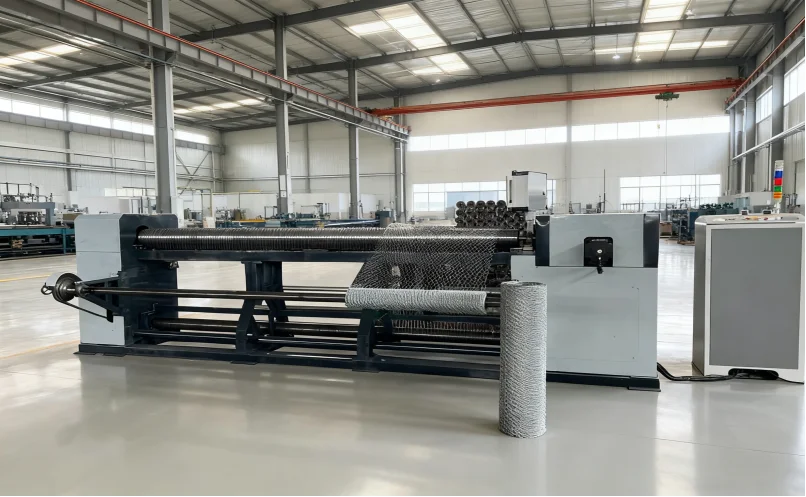
The global infrastructure landscape is witnessing a significant shift toward sustainable and flexible erosion control solutions, where the gabion wire mesh machine plays a pivotal role. By automating the production of heavy-duty double-twisted hexagonal mesh, these machines enable the creation of gabions—rock-filled cages that provide essential stability for riverbanks, highways, and coastal defenses. Understanding the mechanics and capabilities of this equipment is crucial for engineers and manufacturers aiming to enhance structural durability while minimizing environmental impact.
From a commercial perspective, the demand for high-precision wire weaving has surged as urban expansion pushes into challenging terrains. A modern gabion wire mesh machine is no longer just a mechanical loom but a sophisticated piece of industrial engineering that integrates PLC controls and servo motors to ensure consistent mesh aperture and twist strength. This evolution allows producers to meet rigorous international standards, such as ISO and ASTM, ensuring that the resulting mesh can withstand extreme hydrostatic pressure and corrosive environments.
Ultimately, investing in the right weaving technology translates to long-term value in civil engineering projects. By optimizing the production of gabion mesh, industries can reduce material waste, lower labor costs, and accelerate the deployment of flood prevention systems. This guide explores the intricate details of the gabion wire mesh machine, from its core technical components to its diverse global applications, providing a comprehensive resource for professionals in the wire mesh industry.

Global Relevance of Gabion Wire Mesh Machine
In an era of increasing climate volatility, the global demand for soil stabilization and flood mitigation has placed the gabion wire mesh machine at the center of critical infrastructure development. According to reports from the World Bank and various UN environmental agencies, the degradation of riverbanks and the rise of sea levels require scalable, permeable barriers. Gabions, produced by these specialized machines, provide a "living" wall solution that allows water to pass through while trapping sediment, effectively preventing erosion in a way that concrete walls cannot.
The industrial relevance extends across continents, from the mountainous regions of Asia to the coastal plains of Africa and Europe. The challenge has always been the balance between production speed and the structural integrity of the double-twist weave. Without a high-precision gabion wire mesh machine, the mesh is prone to unraveling under stress, which can lead to catastrophic failure in retaining walls. Modern machinery solves this by ensuring every twist is mathematically precise and mechanically locked.
Defining the Gabion Wire Mesh Machine
At its core, a gabion wire mesh machine is a specialized industrial loom designed to weave heavy-gauge galvanized or PVC-coated steel wire into a hexagonal pattern. Unlike standard fencing machines, this equipment focuses on the "double-twist" mechanism. This specific weave ensures that if a single wire is cut or damaged, the surrounding mesh remains intact and does not unravel, which is a non-negotiable requirement for safety-critical civil engineering projects.
Beyond the basic mechanical function, these machines are now defined by their integration of smart technology. Modern versions utilize PLC (Programmable Logic Controller) systems to manage the complex timing of the weaving process, allowing operators to switch between different mesh sizes—such as 50x70mm or 80x100mm—with minimal downtime. This flexibility makes the machine an essential asset for manufacturers serving a diverse range of humanitarian and industrial needs, from emergency dike repairs to permanent highway embankments.
In a broader humanitarian context, the ability to mass-produce durable gabion mesh quickly can be a lifesaver during post-disaster relief operations. When landslides or floods destroy roads, the rapid deployment of gabions produced by an efficient gabion wire mesh machine allows for the immediate stabilization of terrain, facilitating the delivery of aid and the restoration of essential services to remote or devastated areas.
Core Components of High-Performance Weaving
The structural integrity of the final product begins with the precision of the gabion wire mesh machine's mechanical architecture. A key component is the integrated double rack design, which maximizes stability and reduces the physical footprint of the equipment. By utilizing servo motors as the primary power source, the machine achieves a level of machining accuracy that traditional mechanical cams cannot match, ensuring that every twist is uniform across the entire width of the mesh.
Lubrication is another critical factor in the longevity of a gabion wire mesh machine. High-end models feature fully enclosed lubricating oil tanks and timed circulation systems. This not only ensures that all motion mechanisms are constantly lubricated but also acts as a cleaning function, preventing metallic dust and external impurities from entering the gear systems, which would otherwise cause premature wear and tear during 24/7 production cycles.
Furthermore, the PLC interface allows for "one-key" switching between three, five, and seven twists. This capability is vital for varying the strength of the mesh based on the project's specific requirements. Whether producing a light-duty decorative cage or a heavy-duty gabion wire mesh machine output for bridge abutments, the ability to adjust the twist density without manual re-tooling significantly increases operational efficiency.
Key Performance Factors in Production
When evaluating the efficiency of a gabion wire mesh machine, manufacturers focus on several key metrics: weaving speed, wire diameter compatibility, and energy consumption. A machine capable of handling wire diameters from 2.0mm to 4.0mm offers the versatility needed to enter different market segments. The transition from electronic cam programming to servo-driven control has reduced debugging time and increased the overall speed of the weaving cycle without sacrificing the tension of the wire.
The reliability of the machine is often measured by its "uptime" and the consistency of the mesh aperture. In heavy-duty applications, even a slight deviation in the hexagonal size can lead to gaps in the gabion basket, reducing its load-bearing capacity. Therefore, the precision of the thorn shaft and the synchronization of the front and rear racks are the primary indicators of a machine's quality and its ability to produce industry-standard mesh.
Performance Analysis of Gabion Wire Mesh Machine Configurations
Global Applications and Industrial Use Cases
The output of a gabion wire mesh machine is utilized in a vast array of civil engineering projects worldwide. In mountainous regions like the Andes or the Himalayas, gabion baskets are essential for creating terrace walls and stabilizing slopes to prevent landslides from blocking critical transport arteries. These structures are preferred over concrete because they are flexible; as the ground settles, the gabions shift without cracking, maintaining the integrity of the slope.
In coastal management, the mesh produced by these machines is used to build breakwaters and revetments. By filling the hexagonal cages with local stone, engineers can create permeable barriers that dissipate wave energy, protecting shorelines from erosion while allowing marine life to inhabit the crevices between the rocks. This ecological advantage makes the gabion wire mesh machine an indispensable tool for sustainable environmental engineering.
Long-Term Value and Sustainability Advantages
Investing in a high-quality gabion wire mesh machine provides tangible economic benefits through the reduction of material waste and labor costs. Because the double-twist mesh is so durable, the resulting gabions have a lifespan that can span decades, especially when using PVC-coated wire. This reduces the frequency of repairs and the overall lifecycle cost of infrastructure projects, providing long-term reliability for government and private contractors.
From a sustainability standpoint, gabion solutions are far more eco-friendly than traditional poured concrete. They require no chemical binders and utilize naturally occurring stone, significantly lowering the carbon footprint of the construction process. A gabion wire mesh machine empowers manufacturers to support "green" building initiatives, aligning industrial production with global ESG (Environmental, Social, and Governance) goals.
Moreover, there is a profound social impact in the use of gabion technology. In developing regions, gabion baskets can be filled by local labor using local materials, providing employment opportunities and fostering community ownership of infrastructure projects. The ability to produce this mesh efficiently via a gabion wire mesh machine ensures that these low-cost, high-impact solutions are available where they are needed most.
Future Trends in Wire Mesh Automation
The future of the gabion wire mesh machine lies in the further integration of Industry 4.0 principles. We are seeing a move toward "Smart Weaving," where sensors monitor wire tension in real-time, automatically adjusting the servo motors to prevent wire breakage. This predictive maintenance approach minimizes unplanned downtime and ensures that the mesh quality remains consistent regardless of the raw material's slight variations in tensile strength.
Another emerging trend is the development of specialized coatings and alloys. As projects move into more corrosive environments, such as high-salinity offshore zones, the gabion wire mesh machine must be capable of handling new composite wires without causing surface abrasions. The evolution of the weaving head to accommodate these materials will be key to expanding the application of gabions in deep-sea engineering.
Finally, the drive toward carbon neutrality is pushing the industry toward energy-efficient motor systems. The transition to high-efficiency permanent magnet synchronous motors in the gabion wire mesh machine reduces power consumption by up to 30%, making the production process as sustainable as the final product itself.
Technical Comparison of Gabion Wire Mesh Machine Specifications
| Machine Model |
Wire Diameter Range |
Max Mesh Width |
Control System |
| PLC Heavy-Type A |
2.0mm - 4.0mm |
600mm (Customizable) |
Full Servo PLC |
| Standard Industrial |
2.0mm - 3.0mm |
500mm |
Mechanical Cam |
| Precision-Weave B |
1.5mm - 3.5mm |
700mm |
Semi-Servo |
| Ultra-Heavy Duty |
3.0mm - 5.0mm |
800mm |
Full Servo PLC |
| Economy Series |
2.0mm - 2.5mm |
400mm |
Manual/Mechanical |
| Customized Modular |
2.0mm - 4.5mm |
1000mm |
Advanced PLC |
FAQS
The primary advantage is structural security. A double-twist weave, produced by a specialized gabion wire mesh machine, ensures that the wires are locked together. If a wire is severed, the mesh does not unravel, which is critical for retaining walls and flood defenses. Single-twist mesh lacks this inherent stability and is unsuitable for heavy-load civil engineering.
Wire diameter depends on the intended application. For light landscaping, 2.0mm to 2.5mm is usually sufficient. For heavy-duty riverbank stabilization or highway abutments, 3.0mm to 4.0mm is required. Ensure your gabion wire mesh machine is rated for the specific diameter to avoid excessive wear on the weaving components and to maintain twist precision.
Yes, PLC-controlled gabion wire mesh machines are designed for versatility. They allow operators to switch between common mesh sizes (like 50x70mm or 80x100mm) via a digital interface. This eliminates the need for complex mechanical adjustments and reduces the downtime associated with changing product specifications, significantly increasing factory throughput.
With proper maintenance, a high-quality machine can last 10-20 years. The key is the lubrication system; machines with timed circulation lubrication and enclosed tanks prevent dust and metal shavings from damaging the gears. Regular inspection of the servo motors and the thorn shaft ensures the machine maintains its accuracy over thousands of hours of operation.
Absolutely. Most modern gabion wire mesh machines are designed to handle both galvanized and PVC-coated wires. The key is ensuring the tensioners and guides are adjusted to account for the slightly larger diameter and different friction coefficient of the PVC coating to prevent surface scratching during the weaving process.
Given the weight and vibration of a heavy-duty gabion wire mesh machine, a reinforced concrete foundation is essential to prevent shifting. Adequate electrical infrastructure for servo motors and a clean, dry industrial environment are also required to protect the PLC electronics and ensure the longevity of the lubrication system.
Conclusion
The gabion wire mesh machine stands as a cornerstone of modern civil engineering, bridging the gap between industrial manufacturing and sustainable infrastructure. By combining high-precision servo control, robust mechanical design, and the unique properties of the double-twist weave, these machines enable the production of erosion control systems that are both durable and environmentally conscious. From stabilizing remote mountain roads to protecting urban coastlines, the efficiency and reliability of the weaving process directly impact the safety and longevity of the built environment.
Looking forward, the integration of smart sensors and energy-efficient systems will further refine the production of gabion mesh, making it more accessible and sustainable. For manufacturers and engineers, the choice of equipment is a strategic decision that affects production costs, product quality, and overall project success. To ensure you are utilizing the most advanced technology in the field, we invite you to explore our range of high-performance solutions. Visit our website: www.htmeshmachines.com