Hit enter to search or ESC to close
Polyester mesh has become one of the most versatile and reliable materials in modern industry. Known for its strength, chemical resistance, and adaptability, polyester mesh is widely used across a broad range of fields, including deep-sea aquaculture, slope protection, underground coal mining, and many other industrial applications. Its unique properties allow it to withstand demanding environments where traditional materials would quickly fail. This article introduces the main applications of polyester mesh and explains why it has become an essential solution in these challenging industries.
1. Polyester Mesh in Deep-Sea Aquaculture
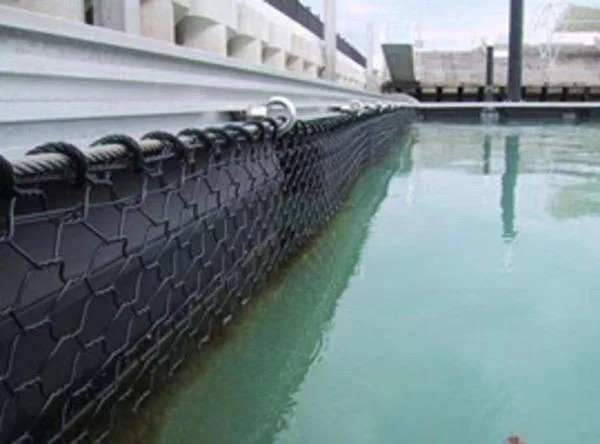
The growth of global seafood consumption has driven rapid expansion in aquaculture, especially offshore and deep-sea farming. In such harsh environments, cages, nets, and barriers must be able to withstand strong ocean currents, waves, and biofouling. Polyester mesh offers several advantages that make it the material of choice:
High tensile strength: Polyester fibers provide durability to resist tearing and stretching caused by fish movement and water forces.
Saltwater and UV resistance: Unlike natural fibers or metals, polyester does not corrode in seawater and retains stability under sunlight exposure.
Reduced maintenance costs: Its anti-biofouling properties slow down algae and barnacle growth, lowering cleaning frequency and extending service life.
Fish farming cages made from polyester mesh ensure secure containment of fish stocks, minimizing escape risks and improving sustainability. Moreover, the lightweight yet strong material allows easier handling and installation compared to heavier alternatives like steel nets. This has positioned polyester mesh as a reliable partner in the sustainable development of global aquaculture.
2. Polyester Mesh for Slope Protection
Another critical application of polyester mesh is in geotechnical engineering, particularly slope protection and soil stabilization. Landslides, erosion, and rockfalls are constant threats in mountainous or infrastructure-heavy areas. To address these risks, engineers deploy polyester mesh as a protective reinforcement layer.
Erosion control: By covering soil surfaces, polyester mesh prevents rainwater from washing away topsoil, thereby preserving vegetation and preventing slope degradation.
Rockfall barriers: In rocky terrain, high-strength polyester mesh captures and restrains falling rocks, protecting highways, railways, and nearby communities.
Flexibility and adaptability: Polyester mesh can be tailored to fit slopes of varying inclines, making it suitable for complex geological conditions.
Compared with metallic meshes, polyester mesh offers better corrosion resistance and a longer service life, especially in humid or chemically aggressive environments. Its lightweight nature also makes transportation and installation more cost-effective. Thus, it has become a preferred choice in modern civil engineering projects requiring safe and sustainable slope protection.
3. Polyester Mesh in Underground Coal Mines
Safety is the highest priority in coal mining, and polyester mesh plays an indispensable role in ensuring secure underground environments. The material is commonly used as roof support mesh, designed to reinforce tunnels and prevent rock falls.
Key benefits of polyester mesh in mining include:
High load-bearing capacity: The mesh resists heavy rock pressure, providing a stable support system in mine roofs and walls.
Flame retardancy: Specially treated polyester mesh meets flame-resistant standards, making it safe for underground use.
Ease of installation: Polyester mesh is lightweight compared to steel wire mesh, enabling faster setup and reducing worker fatigue.
Corrosion resistance: Unlike steel, polyester does not rust in damp underground conditions, reducing replacement frequency.
This combination of strength, safety, and longevity makes polyester mesh an increasingly attractive alternative to traditional metal reinforcements in mining operations worldwide.
4. Additional Industrial Applications
Beyond aquaculture, slope stabilization, and coal mining, polyester mesh finds applications across many other industries thanks to its adaptable characteristics. Some notable examples include:
Filtration systems: In industries such as food processing, chemicals, and pharmaceuticals, polyester mesh serves as an efficient filter medium due to its uniform pore size and chemical resistance.
Construction reinforcement: Polyester mesh sheets are used to reinforce plaster, concrete, and waterproof membranes, improving structural durability.
Agriculture: Mesh covers made from polyester protect crops from birds, insects, and excessive sunlight, while also supporting greenhouse shading systems.
Sports and safety equipment: Polyester mesh is utilized in netting for stadiums, training grounds, and safety barriers, providing strength without adding excessive weight.
These diverse applications highlight the versatility of polyester mesh and its ability to meet industry-specific requirements.
5. Why Polyester Mesh Outperforms Alternatives
Several features explain why polyester mesh is often chosen over traditional materials such as steel, nylon, or natural fibers:
Strength-to-weight ratio: Polyester delivers high tensile strength while remaining lightweight, which simplifies transport and installation.
Environmental resistance: Its resistance to moisture, chemicals, and UV radiation ensures long-term performance in harsh conditions.
Cost efficiency: Longer service life and reduced maintenance lower the total cost of ownership.
Customization: Polyester mesh can be produced in various thicknesses, sizes, and weave patterns to match specific industrial needs.
By combining these advantages, polyester mesh enhances safety, efficiency, and sustainability across industries.
Conclusion
Polyester mesh has evolved into a critical material that supports modern industrial development. In deep-sea aquaculture, it ensures the secure containment of fish in challenging marine conditions. In slope protection, it prevents erosion and rockfalls, safeguarding infrastructure and communities. In underground coal mines, it strengthens tunnels and enhances worker safety. Beyond these, its adaptability extends into construction, agriculture, and filtration systems.
With ongoing innovation in material science, polyester mesh is likely to become even more advanced, offering greater durability, eco-friendliness, and multifunctionality. As industries continue to seek safer, more efficient, and sustainable solutions, polyester mesh will remain at the forefront as a proven and trusted choice.