Unwinding the Magic of Fine Wire Drawing Machines with Continuous Annealing
At first glance, a fine wire drawing machine with continuous annealing might sound like a mouthful of industrial jargon, but honestly, it’s one of those behind-the-scenes heroes keeping modern manufacturing humming.
In a globalized world craving ever-finer electronics, stronger cables, and lightweight components, these machines play a vital role. They combine the art of precision metal shaping with heat treatments on the fly, ensuring wires aren’t just thin but durable and reliable.
Why The World Needs This Technology Now More Than Ever
According to the International Wire & Cable Bureau, global demand for fine metal wires is predicted to surge by nearly 5% annually through 2030, driven by industries from telecommunications to automotive manufacturing.1 Countries far and wide—from Germany’s precision toolmakers to China’s sprawling electronics hubs—rely on advanced wire processing technologies.
And it’s not only about quantity; the challenge is producing incredibly thin wire that maintains strength and conductivity for all sorts of high-tech applications. A fine wire drawing machine with continuous annealing answers this by uniting mechanical drawing with heat treatment, ensuring wires can bend without snapping.
Mini takeaway:
In real terms, this technology helps bridge the gap between raw metal and the ultra-fine, reliable wires essential for everything from smartphones to medical devices.
Breaking It Down: What Is a Fine Wire Drawing Machine with Continuous Annealing?
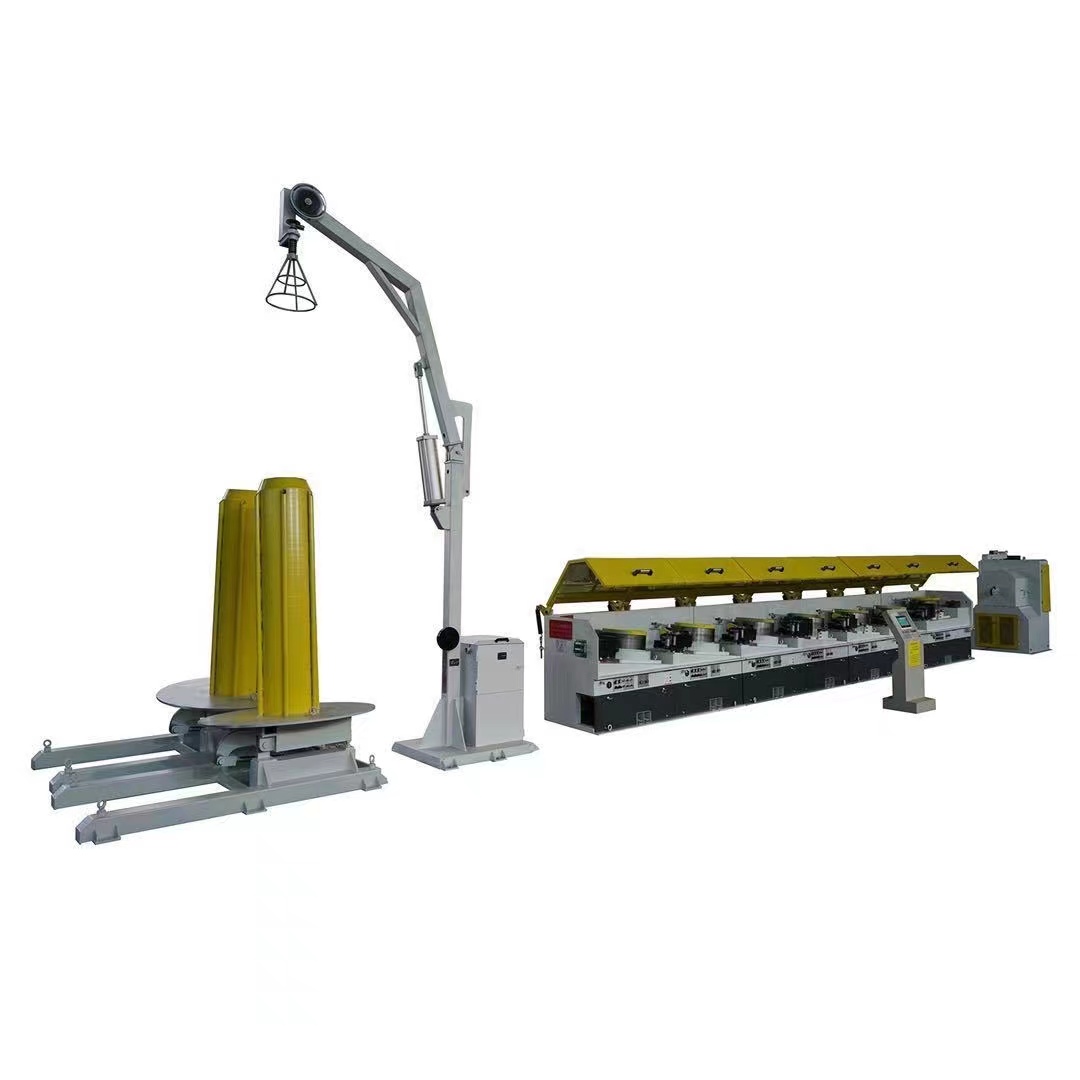
Simply put, a fine wire drawing machine pulls metal through progressively smaller dies to reduce its diameter—in this case, producing ultra-thin wire. Continuous annealing is the heat treatment part, where the wire is softened in a controlled furnace right after drawing. This continuous, seamless combination avoids stops and starts that could damage or weaken the wire.
The result? A fine, strong, and flexible metal wire ready for complex applications, from microelectronics wiring to high-grade mesh fabrics used in aerospace.
Mini takeaway:
This combined process enhances product quality, productivity, and operational efficiency—three essentials in industrial manufacturing’s fast lane.
Core Components and Key Factors Behind the Machine's Success
1. Precision Die Sets
These are the metal forms the wire passes through to reduce diameter. Their accuracy literally determines the wire’s final tolerance and surface finish.
2. Continuous Annealing Furnace
A tightly controlled thermal zone where the wire’s internal stresses realign and soften. I find it fascinating how these furnaces can maintain temperature uniformity to within a degree or two, ensuring every inch of the wire gets just right treatment.
3. Automation & Control Systems
Modern machines come with sophisticated sensors and control panels that constantly monitor tension, speed, and temperature—a godsend for operators aiming for consistent quality without firefighting glitches all day.
4. Cooling Zones
Right after annealing, the wire must cool at a controlled rate to lock in desirable properties. Too fast or slow, and the metal could become brittle or soft in the wrong ways.
5. Scalability and Throughput
Depending on the plant size, machines come in various capacities, from a single line producing a hundred kilos daily to multi-line behemoths running tons nonstop.
Mini takeaway:
Together, these components shape the machine’s versatility and quality—attributes that manufacturers swear by.
Global Applications: Wire Drawing Around the World
This technology spans the globe. For example, in South Korea’s semiconductor industry, ultra-fine gold wires produced via continuous annealing are crucial for chip bonding.2 In construction-heavy regions like the Middle East, copper wire mesh made with this method reinforces concrete and withstands harsh conditions. NGOs even use wires from continuous annealing processes to create durable fencing in wildlife conservation areas.
Oddly enough, during post-disaster rebuilding, flexible cables made from continuously annealed wire help fast-track restoring communications infrastructure when time and reliability are critical.
Mini takeaway:
Whatever the region or industry, the technology adapts to specific needs—from high-tech precision to rugged, everyday durability.
Advantages & Long-Term Value of Continuous Annealing in Wire Drawing
- Cost Efficiency: By combining drawing and annealing, operational costs decrease due to fewer machine stops and less handling.
- Sustainability: Continuous processes tend to lower energy consumption compared to batch annealing, aligning with growing green manufacturing goals.
- Consistency: Uniform wire properties reduce defects, improving final product reliability.
- Innovation-Friendly: The machine’s precision makes developing new alloys or wire dimensions more feasible.
- Worker Safety & Comfort: Automation reduces human exposure to hot zones and repetitive manual tasks.
Mini takeaway:
The benefits combine economics and ethics, reflecting modern industry’s move towards smarter, cleaner, and safer manufacturing.
Looking Ahead: Future Trends in Wire Drawing Machines with Continuous Annealing
Industry 4.0 has entered the workshop floor. IoT-compatible sensors collect real-time data, enabling predictive maintenance and remote troubleshooting—the dream for plants spread across continents.
Meanwhile, greener annealing furnace designs powered by clean energy and advanced insulation reduce emissions dramatically. Some engineers are even experimenting with hybrid annealing—integrating plasma treatment to enhance wire surface properties.
The digitization trend is also making it easier for manufacturers to customize wire characteristics on-demand, allowing rapid shifts between product lines without months of retooling.
Mini takeaway:
The future is not just about making thinner wire but smarter and greener processes at scale.
Challenges & Expert Solutions
Of course, no tech is perfect out of the gate. Challenges include:
- Maintaining Uniform Heat Treatment: Temperature fluctuations can cause wire inconsistencies.
- Die Wear and Replacement Costs: Precision dies wear down, requiring expensive maintenance.
- Energy Consumption: Continuous annealing still demands significant power.
Experts suggest advance simulation software during design to optimize furnace profiles, as well as new ceramic-based die materials that extend lifespan with less wear. Lastly, renewable energy integrations help offset environmental impacts—making the technology future-proof.
Mini takeaway:
The race is on to improve efficiency and sustainability without compromising the core performance.
FAQ: Common Questions About Fine Wire Drawing Machines with Continuous Annealing
- Q1: What wire materials can be processed by these machines?
- A1: Mostly copper, aluminum, brass, and stainless steel—but also specialty alloys like phosphor bronze or nickel-based metals, depending on the application.
- Q2: How important is automation in these wire drawing machines?
- A2: It’s pretty crucial. Automation ensures consistent tension control, minimizes human error, and optimizes annealing conditions, leading to higher quality and throughput.
- Q3: Can the continuous annealing process handle ultra-fine wires below 0.1 mm diameter?
- A3: Yes, modern machines are designed to handle micro-diameters, but it requires precision dies and tightly controlled thermal zones—there’s no room for error at that scale!
- Q4: How do manufacturers maintain environmental standards during continuous annealing?
- A4: By using energy-efficient furnaces, waste heat recovery systems, and adhering to ISO 14001 environmental management practices, manufacturers reduce carbon footprints and comply with regulations.
- Q5: What’s the typical production speed for a fine wire drawing machine with continuous annealing?
- A5: Speeds vary by model and wire type but can range from 50 to 300 meters per minute, balancing speed with quality control.
Product Specification Table
| Specification |
Typical Range |
Notes |
| Wire Diameter |
0.02 mm – 2 mm |
Dependent on die sets |
| Drawing Speed |
50 – 300 m/min |
Adjustable for quality control |
| Annealing Temperature |
500 – 900°C |
Varies by metal type |
| Maximum Wire Tensile Strength |
Up to 1500 MPa |
Optimized via annealing |
| Power Consumption |
15 – 50 kW |
Depends on machine size |
Vendor Comparison Table
| Vendor |
Price Range |
Automation Level |
Customization Options |
Warranty & Support |
| HTM Wire Systems |
$120,000 - $250,000 |
High (IoT enabled) |
Fully customizable fine wire drawing machine with continuous annealing |
5 years plus remote diagnostics |
| Metallurgica Pro |
$90,000 - $210,000 |
Medium (semi-automatic) |
Standard modular options |
3 years with on-site support |
| WireGear Industrial |
$150,000 - $300,000 |
High (fully automated) |
Custom engineering available |
Comprehensive 5-year plan |
Wrapping Up: Why Invest in Fine Wire Drawing Machines with Continuous Annealing?
Fine wire drawing machines with continuous annealing have quietly revolutionized metal wire manufacturing, addressing the global need for thinner, stronger, and more reliable wires. For anyone in industries from electronics to infrastructure, investing in this technology means stepping into a future of efficiency, sustainability, and high-quality output. Whether you’re a plant manager exploring upgrades or an engineer fascinated by process innovation, these machines deserve a closer look.
Curious? Feel free to explore the latest fine wire drawing machine with continuous annealing systems and discover how they can streamline your production line.
References:
- International Wire & Cable Bureau (IWCB) - Industry Forecasts 2023
- Wikipedia contributors. “Metal wire.” Wikipedia, The Free Encyclopedia. https://en.wikipedia.org/wiki/Metal_wire
- ISO 14001 Environmental Management Standards