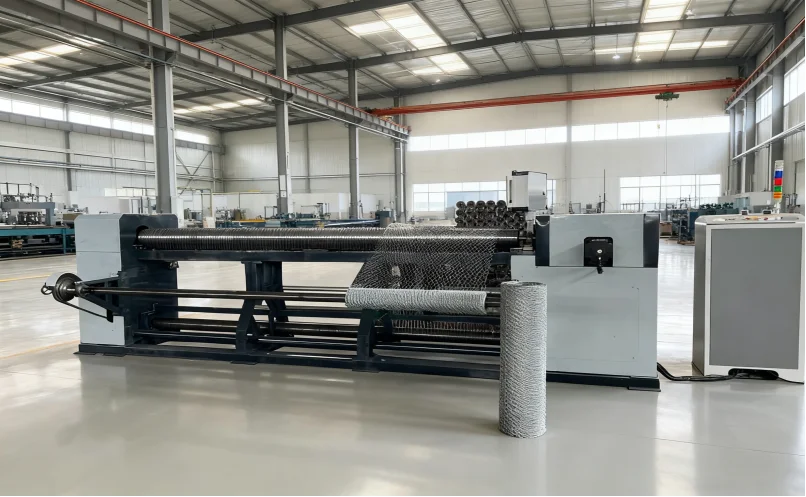
The global demand for sustainable infrastructure and erosion control has propelled the gabion wire mesh machine into a critical role within the heavy machinery sector. These specialized systems are designed to produce the robust, double-twisted hexagonal mesh required to create rock-filled baskets, which are essential for stabilizing riverbanks and reinforcing slopes across diverse terrains.
As urban expansion pushes further into fragile ecosystems, the necessity for high-precision equipment that can handle heavy-gauge wire becomes paramount. A high-quality gabion wire mesh machine ensures that the resulting mesh possesses the structural integrity to withstand immense pressure and environmental degradation over decades, reducing the need for frequent maintenance and costly repairs.
By integrating advanced automation and servo-motor technology, the modern gabion wire mesh machine allows manufacturers to achieve unprecedented levels of consistency and speed, transforming raw metal wire into essential components for global civil engineering projects.

The Engineering Logic of Gabion Wire Mesh Machine
The engineering logic behind a heavy-type gabion wire mesh machine centers on the ability to manipulate thick-gauge wires (2.0mm to 4.0mm) into precise hexagonal patterns. This process requires an immense amount of torque and structural rigidity, which is why professional-grade machines often feature a main engine weight exceeding 18 tons to minimize vibration and ensure machining accuracy.
Unlike lightweight mesh equipment, this machinery utilizes a patented integrated double rack design. By powering both the front and rear racks, the equipment achieves a more streamlined structure that occupies less space during movement while maintaining the stability required for high-speed weaving of heavy-duty mesh.
Core Technical Parameters and Specifications
To understand the capability of a gabion wire mesh machine, one must look at the technical constraints of the mesh size and wire diameter. Standard configurations typically handle mesh sizes such as 5070mm, 6080mm, 7090mm, and 80100mm, though these can be customized to meet specific project requirements. The ability to process wire diameters from 2.0mm up to 4.0mm allows for the production of extreme-duty baskets used in high-flow river environments.
Another critical specification is the "Number of Twists," which directly impacts the mesh's resistance to unraveling. These machines are equipped with PLC systems that allow operators to switch between three, five, and seven twists with a single key press. This flexibility ensures that the mesh produced meets the specific strength ratings required by international engineering standards.
Power consumption and motor type also play a pivotal role. By utilizing servo motors as the primary power sources, the machine offers easier debugging and faster weaving speeds compared to traditional mechanical drives. The power range typically spans from 33kw to 45kw, providing the necessary energy to drive the complex twisting mechanisms consistently.
Innovative Design Advantages for Heavy Duty Production
One of the standout innovations in the modern gabion wire mesh machine is the move away from cumbersome electronic cam programming. By implementing a system that allows for arbitrary switching between intermittent and continuous rotation of the thorn shaft, manufacturers can adjust the equipment in any operating state at any position.
The integration of fully enclosed lubricating oil tanks on both sides of the equipment represents a significant leap in durability. This timed circulation lubrication method ensures that the motion mechanism is constantly lubricated while simultaneously cleaning the parts, preventing dust and industrial impurities from entering and damaging the internal gears of the gabion wire mesh machine.
Furthermore, the use of PLC heavy-type control systems allows for dual twist data management. This means that the operator can shift the production focus from medium-duty to heavy-duty mesh without needing to manually rebuild the mechanical timing, drastically reducing downtime and increasing the overall throughput of the facility.
Comparative Performance of Weaving Technologies
When evaluating the efficiency of different production methods, the transition to servo-driven systems has set a new benchmark. Traditional mechanical gabion wire mesh machine setups often struggled with synchronization at higher speeds, leading to inconsistent mesh sizes and increased wire waste.
In contrast, the dual-rack powered design ensures that the tension is distributed evenly across the weaving process. This leads to higher machining accuracy and significantly faster weaving speeds, which is essential for large-scale government contracts where deadlines are strict and quality audits are rigorous.
Production Efficiency Comparison by Machine Type
Global Applications in Civil Engineering
The output from a professional gabion wire mesh machine is utilized worldwide for critical infrastructure projects. In mountainous regions of South America and Asia, gabion baskets are used to prevent landslides and protect highway embankments from erosion during monsoon seasons. The double-twisted nature of the mesh ensures that if a single wire is cut, the surrounding mesh remains intact, providing a safety factor that is essential for public infrastructure.
Beyond erosion control, these machines support the construction of retaining walls in urban development and the creation of artificial reefs for marine conservation. In these contexts, the ability to customize mesh width and wire diameter allows engineers to tailor the strength of the baskets to the specific weight of the rock fill and the intensity of the water currents they must withstand.
Enhancing Operational Safety and Stability
Safety in a heavy industrial environment is non-negotiable, and the design of the modern gabion wire mesh machine reflects this. The patented integrated double rack design is not only about space-saving but also about lowering the center of gravity and increasing the stability of the machine during high-torque operations.
Furthermore, the shift to servo motors reduces the reliance on complex mechanical linkages that are prone to sudden failure. By using a PLC to manage the twist data, the machine operates with a level of predictability that prevents mechanical jams and reduces the risk of operator injury during the adjustment process.
The addition of auxiliary equipment, such as the spring winding machine and the gabion wire mesh cutting machine, creates a complete production line. This integrated approach ensures that the transition from weaving to cutting is seamless, reducing the manual handling of heavy wire rolls and further improving workplace safety.
Strategic Maintenance and Long-term Value
Investing in a heavy-type gabion wire mesh machine is a long-term strategic decision. The core components are self-processed by professional manufacturers to ensure quality control at the source, meaning the machine is built to withstand years of continuous operation in harsh industrial environments.
The implementation of the timed circulation lubrication system is a key factor in extending the machine's lifespan. By automating the lubrication process and shielding it from external contaminants, the wear and tear on the internal motion mechanisms are significantly reduced, lowering the total cost of ownership over the equipment's lifecycle.
Ultimately, the value of such equipment lies in its versatility. The ability to switch between three, five, and seven twists via a PLC means a single machine can serve multiple market segments—from lightweight decorative gabions to heavy-duty industrial barriers—ensuring the manufacturer remains competitive regardless of shifting market demands.
Core Technical Performance Analysis of Heavy-Type Gabion Machines
| Performance Metric |
Traditional Mechanical |
PLC Servo System |
Impact on Production |
| Adjustment Speed |
Manual/Slow |
One-Key Switching |
Reduced Downtime |
| Machining Accuracy |
Moderate |
High Precision |
Lower Waste Rate |
| Lubrication Method |
Manual Grease |
Timed Circulation |
Extended Part Life |
| Wire Range (mm) |
Up to 2.5mm |
Up to 4.0mm |
Heavier Duty Output |
| Power Source |
Standard Motor |
Full Servo Drive |
Faster Weaving Speed |
| Structural Design |
Single Rack |
Integrated Double Rack |
Enhanced Stability |
FAQS
Our heavy-type machines are specifically engineered to handle wire diameters ranging from 2.0mm to 4.0mm. This allows for the production of high-strength mesh suitable for industrial-grade gabion baskets used in severe erosion control and heavy structural reinforcement projects.
Yes. Thanks to the integrated PLC system, the machine is equipped with dual twist data. Operators can switch between three, five, and seven twists with a single key press, eliminating the need for cumbersome mechanical adjustments or electronic cam programming.
The fully enclosed lubricating oil tanks use a timed circulation method to ensure all motion mechanisms are consistently lubricated. This not only reduces friction and wear but also acts as a cleaning mechanism to prevent dust and impurities from damaging internal components.
The patented integrated double rack design allows both racks to be powered, which provides a more streamlined structure and higher stability. It takes up less space during rack movement and reduces vibration, leading to higher machining accuracy and faster weaving speeds.
Absolutely. While standard sizes like 5070mm and 80100mm are common, the gabion wire mesh machine can be customized to produce specific mesh widths and sizes to meet the exact technical requirements of your civil engineering project.
Servo motors provide precise control over movement and torque, making the debugging process significantly easier. They contribute to higher machining accuracy and allow for the rapid weaving speeds necessary for high-volume industrial production.
Conclusion
The evolution of the gabion wire mesh machine from a manual mechanical process to a PLC-driven, servo-powered powerhouse has revolutionized the production of erosion control materials. By focusing on core pillars such as the integrated double rack design, timed circulation lubrication, and the ability to handle wire up to 4.0mm, manufacturers can now produce mesh that meets the most stringent global engineering standards with unprecedented efficiency and stability.
As the world continues to invest in sustainable infrastructure and climate-resilient engineering, the demand for high-precision, heavy-duty weaving equipment will only grow. For businesses looking to scale their production and ensure a competitive edge in the industrial mesh market, investing in advanced automation is no longer optional—it is the key to long-term viability and quality assurance. Visit our website: www.htmeshmachines.com